
- Complete IT Solutions for a Digital World
Benefits of Mobile App Development for Small Businesses
How Mobile App Development Helps Small Businesses Increase Customer Engagement, Improve Brand Visibility, and Drive Business Growth
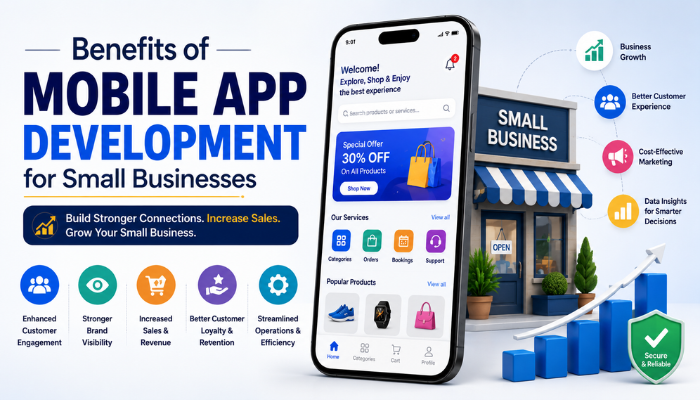
In today's digital age, smartphones have become an essential part of everyday life. Customers use mobile devices for shopping, booking services, communicating with businesses, making payments, and accessing information. As mobile usage continues to increase, businesses must adapt to changing consumer behavior to remain competitive.
For small businesses, investing in a mobile application is no longer a luxury—it has become a powerful business growth strategy. Mobile apps help businesses connect directly with customers, improve customer engagement, strengthen brand visibility, and increase sales.
Whether you own a retail store, restaurant, salon, healthcare clinic, educational institute, real estate agency, or service-based business, a mobile app can help you reach more customers and streamline operations.
This article explores the major Benefits of Mobile App Development for Small Businesses and explains why mobile apps are becoming essential for long-term success.
Growing Importance of Mobile Apps
The number of smartphone users worldwide continues to grow rapidly. Consumers prefer mobile apps because they offer convenience, speed, and personalized experiences.
Unlike websites, mobile apps provide instant access to services and information directly from a customer's smartphone. Businesses that invest in mobile app development gain a competitive advantage by offering customers a more convenient and engaging experience.
As customer expectations evolve, mobile applications are becoming one of the most effective tools for building stronger customer relationships and driving business growth.
Enhanced Customer Engagement
One of the biggest benefits of mobile app development is improved customer engagement. Mobile applications provide businesses with direct communication channels through push notifications, in-app messages, and personalized offers.
Businesses can instantly notify customers about new products, special promotions, discounts, and updates. Unlike emails that may go unread, push notifications have significantly higher engagement rates. This helps businesses maintain regular communication with customers and encourage repeat interactions.
Engaged customers are more likely to remain loyal and make repeat purchases, contributing directly to business growth.
Improved Brand Visibility
A mobile app increases brand exposure by keeping your business visible on customers' smartphones. Every time customers unlock their devices, your app icon reminds them of your brand.
This constant visibility helps strengthen brand recognition and awareness. Mobile apps also create a professional image that builds trust among customers. Businesses with dedicated apps often appear more reliable and technologically advanced than competitors without apps.
Strong brand visibility contributes to long-term customer loyalty and sustained business success.
Better Customer Experience
Customer experience plays a critical role in business success. Mobile apps offer faster navigation, personalized content, and convenient access to products and services.
Customers can browse offerings, make purchases, book appointments, and contact support without needing to visit a website. Features such as saved preferences, quick login options, secure payment gateways, and personalized recommendations improve the overall customer experience.
A positive user experience encourages customers to spend more time interacting with your business and increases the likelihood of repeat purchases.
Increased Sales and Revenue
One of the primary goals of any business investment is revenue growth. Mobile applications make purchasing easier and more convenient for customers.
With just a few taps, users can browse products, place orders, complete payments, and track deliveries. Businesses can also use mobile apps to offer exclusive discounts, loyalty rewards, referral programs, and personalized promotions.
These strategies encourage customers to make purchases more frequently, resulting in increased sales and higher revenue.
Improved Customer Loyalty
Customer retention is often more cost-effective than acquiring new customers. Mobile applications help businesses build loyalty through reward programs, membership benefits, and personalized experiences.
Businesses can offer loyalty points, exclusive discounts, special promotions, referral rewards, and VIP memberships. Customers appreciate personalized experiences and rewards, making them more likely to continue choosing your business over competitors.
Strong customer loyalty contributes to sustainable long-term growth.
Direct Marketing Channel
A mobile app serves as a powerful marketing tool. Businesses can communicate directly with customers through push notifications, in-app messages, promotional campaigns, product announcements, and event invitations.
This direct communication eliminates the need to rely entirely on third-party advertising platforms. Businesses can target customers with personalized marketing campaigns based on their preferences, behavior, and purchase history.
This improves marketing effectiveness and increases return on investment.
Competitive Advantage
Many small businesses still rely solely on websites and social media platforms. Having a dedicated mobile app gives your business a significant competitive advantage.
Customers increasingly prefer businesses that offer convenient mobile experiences. An app demonstrates professionalism, innovation, and commitment to customer satisfaction.
Businesses that adopt mobile technology early often outperform competitors who are slower to adapt.
Better Customer Support
Customer service significantly impacts customer satisfaction and retention. Mobile apps simplify support through features such as live chat, help centers, FAQs, ticket systems, and direct messaging.
Customers can quickly access support whenever they need assistance. Fast and efficient support improves customer satisfaction and strengthens business relationships.
Personalized User Experience
Modern consumers expect personalized experiences. Mobile applications allow businesses to collect customer preferences and behavior data.
Using this information, businesses can offer personalized recommendations, customized offers, relevant content, and tailored promotions. Personalization improves customer engagement and increases conversion rates.
Customers are more likely to interact with businesses that understand their needs and preferences.
Better Data Collection and Analytics
Data-driven decision-making helps businesses improve performance. Mobile apps provide valuable insights into customer behavior, including user activity, purchase history, popular products, customer preferences, and engagement patterns.
Businesses can analyze this information to optimize marketing strategies, improve services, and identify growth opportunities. Accurate data helps businesses make informed decisions and maximize profitability.
Increased Accessibility
Mobile applications allow customers to access your business anytime and anywhere. Unlike physical stores with operating hours, mobile apps remain available 24/7.
Customers can browse products, place orders, book services, contact support, and access information whenever they need. This constant accessibility improves convenience and increases business opportunities.
Streamlined Business Operations
Mobile applications can also improve internal business processes. Custom mobile apps help automate tasks such as appointment scheduling, inventory management, employee communication, customer management, and order processing.
Automation reduces manual work, improves efficiency, and minimizes operational errors. This allows businesses to focus more on growth and customer satisfaction.
Cost-Effective Marketing
Traditional advertising methods can be expensive. Mobile apps offer a cost-effective alternative by providing direct access to customers.
Businesses can promote products and services through push notifications, in-app promotions, loyalty campaigns, and referral programs. These marketing methods often deliver higher engagement rates at lower costs than traditional advertising.
Mobile Commerce Growth
Mobile commerce continues to grow rapidly. Consumers increasingly prefer shopping through mobile devices rather than desktop computers.
Businesses with mobile applications can capitalize on this trend by offering seamless shopping experiences. Features such as one-click purchasing, secure payment gateways, and order tracking make mobile commerce highly convenient for customers.
Security and Trust
Professional mobile applications incorporate advanced security features to protect customer data. Security measures include data encryption, secure payment processing, user authentication, and privacy controls.
Strong security builds customer trust and encourages users to engage with your business confidently.
Why Small Businesses Should Invest in Mobile App Development
The digital marketplace is becoming increasingly competitive. Businesses that invest in mobile applications gain advantages such as stronger customer relationships, better customer retention, increased sales, enhanced brand visibility, and improved operational efficiency.
Mobile apps are no longer limited to large corporations. Affordable development technologies now make mobile apps accessible to small businesses as well.
Why Choose Technology Xtend for Mobile App Development
Technology Xtend provides professional mobile app development solutions tailored to the needs of small businesses.
Services include Android App Development, iOS App Development, Flutter Development, React Native Development, eCommerce App Development, and Custom Mobile App Solutions.
Technology Xtend focuses on creating secure, scalable, and user-friendly mobile applications that help businesses improve customer engagement and achieve sustainable growth.
Conclusion
The benefits of mobile app development for small businesses extend far beyond convenience. Mobile applications improve customer engagement, strengthen brand visibility, increase sales, enhance customer loyalty, and streamline operations.
As smartphone usage continues to grow, businesses that invest in mobile applications position themselves for long-term success in an increasingly digital marketplace.
Whether you are launching a new business or expanding an existing one, investing in a professionally developed mobile application can provide a significant competitive advantage and accelerate business growth.