
- Complete IT Solutions for a Digital World
How Businesses Can Manage Sales Activities in One Place
Learn how businesses can manage customer details, sales leads, follow-ups, employee activities, and sales reports using one centralised system.
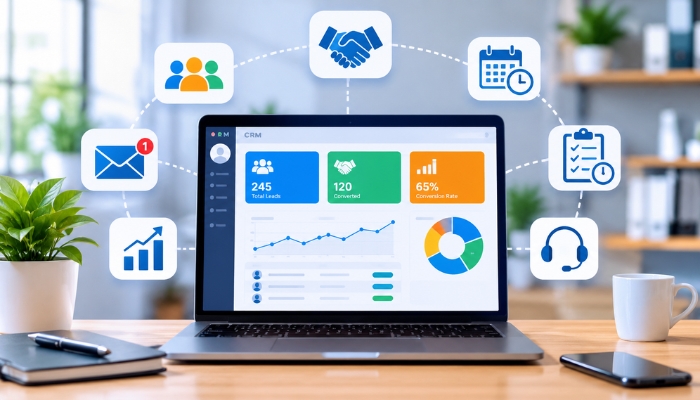
Managing sales activities can become difficult when a business handles many customers, enquiries, follow-ups, and orders every day. Sales teams often use different tools, spreadsheets, and messages to keep track of their work. This can lead to missed enquiries, delayed responses, and confusion.
A sales management system helps businesses manage their sales activities in one place. It keeps customer details, sales records, follow-ups, and team activities organised so that businesses can manage their work more easily.
Here are some ways businesses can manage their sales activities using one system.
1. Keep All Customer Details in One Place
Sales teams receive enquiries from websites, phone calls, social media, and other sources. Managing these details separately can make it difficult to find customer information when needed.
A customer management system stores important details such as customer names, phone numbers, email addresses, enquiry details, and previous conversations in one place.
This helps sales teams find customer information quickly and manage enquiries more easily.
2. Track Every Sales Enquiry
Sometimes businesses receive many enquiries but fail to follow up with every customer. This can result in missed sales opportunities.
A lead management system helps businesses record new enquiries and track their progress. Sales teams can check which leads are new, contacted, interested, or ready to make a purchase.
This makes it easier to manage every enquiry without losing important information.
3. Manage Customer Follow-Ups
Following up with customers is an important part of the sales process. Some customers need more information or time before making a decision.
Businesses can use sales management software to record follow-up dates, customer responses, and the next steps.
This helps sales teams remember pending conversations and contact customers at the right time.
4. Assign Leads to Different Sales Employees
When multiple employees handle sales, it is important to divide enquiries properly. Without a clear process, two employees may contact the same customer or some enquiries may remain unattended.
A CRM system allows businesses to assign leads to different sales employees. Managers can check who is handling each enquiry and review the progress of their team.
This improves teamwork and makes lead management easier.
5. Track Sales Activities and Progress
Business owners and sales managers need to understand how their teams are performing.
A sales tracking system can help record important activities such as new enquiries, customer calls, meetings, follow-ups, and completed sales.
These records help managers understand the current sales situation and identify areas that need attention.
6. Keep Customer Communication Records
Sales conversations can happen through phone calls, emails, and other communication channels. When these details are not recorded, employees may forget previous discussions.
Keeping customer communication records in one system helps sales teams understand what was discussed earlier.
It also makes it easier for another employee to continue a conversation when required.
7. Create Sales Reports
Sales reports help businesses understand their performance. Without organised records, preparing reports can take a lot of time.
Sales management software can help businesses view information such as total enquiries, completed sales, pending leads, and employee activities.
These reports help managers review progress and make better business decisions.
8. Reduce Manual Work With Automation
Many sales tasks are repeated every day, such as assigning leads, sending reminders, updating records, and checking pending enquiries.
Business automation can reduce some of this manual work. Automated reminders and notifications help employees stay updated about important sales activities.
This allows sales teams to spend more time communicating with customers and managing opportunities.
9. Improve Coordination Between Sales Teams
When all sales employees use separate files and tools, sharing information becomes difficult.
A centralised sales management system allows authorised team members to access updated customer and sales information.
This helps employees work together, avoid duplicate efforts, and manage customer enquiries more smoothly.
10. Choose the Right Sales Management Software
Every business has different sales requirements. Some need basic lead tracking, while others need employee management, reports, customer records, and automated follow-ups.
Before choosing custom sales management software, businesses should check their daily work process and identify the features they need.
A suitable system should be easy to use, support business requirements, and allow the team to manage sales activities without unnecessary complications.
Sales Activities and Their Uses
Different sales activities need proper tracking and management. A centralised system can help businesses organise these tasks in the following ways:
| Sales Activity | How a System Helps | Business Benefit |
|---|---|---|
| Customer Management | Stores customer details and enquiry records. | Easy access to customer information. |
| Lead Tracking | Records new leads and tracks their status. | Better enquiry management. |
| Follow-Ups | Records follow-up dates and reminders. | Fewer missed customer enquiries. |
| Employee Management | Assigns leads and tracks employee activities. | Better team coordination. |
| Sales Reports | Organises sales records and performance data. | Better business planning. |
| Task Automation | Automates selected reminders and notifications. | Less repetitive manual work. |
Benefits of Managing Sales Activities in One Place
Using one system to manage sales activities can help businesses:
- Keep customer information organised.
- Track new and existing sales leads.
- Manage customer follow-ups.
- Assign enquiries to sales employees.
- Monitor team activities.
- Prepare sales reports more easily.
- Reduce repeated manual work.
- Improve communication between employees.
Conclusion
Managing sales activities through different tools can create confusion and make it difficult to track customer enquiries. A centralised sales management system helps businesses keep customer details, leads, follow-ups, employee activities, and sales reports in one place.
With the right CRM and lead management software, businesses can organise their sales process, improve team coordination, and manage customer enquiries more effectively.
Technology Xtend provides custom software development and lead management solutions to help businesses organise their daily operations and manage customer enquiries through a single system.