
- Complete IT Solutions for a Digital World
How Real Estate CRM Software Helps Manage Leads and Clients
Discover how real estate CRM software helps businesses manage leads, track clients, automate follow-ups, and improve sales operations.
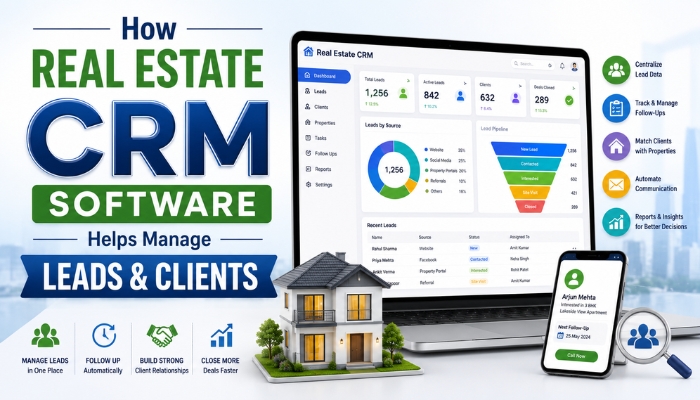
The real estate industry depends heavily on effective lead management, quick communication, and strong client relationships. Real estate companies often receive enquiries from websites, property portals, social media, advertisements, referrals, and other channels. Managing all these leads manually can become difficult as the business grows.
Real estate CRM software provides a centralized system for collecting, organizing, tracking, and managing leads and clients. It helps sales teams monitor every enquiry, follow up at the right time, manage property-related information, and improve communication throughout the sales process.
What Is Real Estate CRM Software?
Real estate CRM software is a customer relationship management system designed to help property businesses manage leads, clients, properties, sales activities, and communication from one platform.
A real estate CRM system can help businesses manage:
- Property enquiries
- Buyer and seller leads
- Client information
- Property preferences
- Follow-up schedules
- Sales activities
- Site visits
- Lead status
- Agent performance
- Customer communication
- Reports and analytics
Instead of maintaining information across spreadsheets, notebooks, emails, and different applications, a real estate CRM system can bring important information together in one centralized platform.
Why Lead Management Is Important in Real Estate
Real estate businesses can receive a large number of enquiries every day. However, not every lead is ready to make an immediate decision.
Some prospects may be looking for a property immediately, while others may need weeks or months before making a purchase or investment decision.
Without an organized real estate lead management system, sales teams may experience:
- Missed follow-ups
- Duplicate lead records
- Delayed responses
- Lost customer information
- Poor communication
- Difficulty tracking sales activities
- Lack of visibility into team performance
CRM software helps create a structured process for managing these leads from the first enquiry through conversion.
How Real Estate CRM Software Helps Manage Leads
1. Centralized Lead Management
One of the biggest advantages of a real estate CRM is centralized lead management.
Leads from different sources can be recorded and organized within one system.
For example, enquiries may come from:
- Company websites
- Google Ads
- Social media
- Property portals
- Phone calls
- Referrals
- Landing pages
A centralized CRM helps sales teams access lead information without searching through multiple platforms.
2. Lead Source Tracking
Knowing where leads come from can help real estate businesses understand which marketing channels are generating enquiries.
A CRM can categorize leads according to their source, such as:
| Lead Source | Example |
|---|---|
| Website | Property enquiry form |
| Google Ads | Search advertisement |
| Social Media | Facebook or Instagram campaign |
| Property Portal | Online property listing |
| Direct enquiry | |
| Referral | Existing customer or partner |
| Phone | Direct call |
This information can help businesses evaluate their real estate marketing performance and make better decisions about future campaigns.
3. Lead Status Management
Not every lead is at the same stage of the sales process. A CRM allows teams to assign different statuses to leads.
Common real estate lead statuses include:
- New Lead
- Contacted
- Interested
- Property Shared
- Site Visit Scheduled
- Site Visit Completed
- Negotiation
- Follow-Up Required
- Converted
- Not Interested
- Closed
This makes it easier for sales representatives to understand what action should be taken next.
4. Automated Lead Assignment
When multiple sales representatives are working together, manually assigning every enquiry can take time.
Real estate CRM software can help assign leads according to predefined rules.
Leads can potentially be assigned based on:
- Sales representative
- Location
- Property type
- Lead source
- Availability
- Branch
- Customer requirements
This can help ensure that new enquiries reach the appropriate team member quickly.
5. Follow-Up Management
Follow-up is one of the most important parts of real estate sales.
A potential buyer may not be ready to purchase a property during the first conversation. Regular and well-timed follow-ups can help sales teams stay connected with prospects.
CRM systems can help sales representatives record:
- Follow-up dates
- Previous conversations
- Customer requirements
- Property preferences
- Meeting details
- Next actions
This reduces the possibility of forgetting important follow-ups.
6. Client Information Management
Real estate businesses need to maintain detailed information about their clients.
A real estate CRM system can store information such as:
- Customer name
- Contact details
- Preferred location
- Property type
- Budget range
- Buying or renting preference
- Preferred property size
- Previous communication
- Site visit history
- Notes from sales representatives
Having this information available helps sales teams understand customer requirements before contacting them.
7. Property and Lead Matching
Real estate CRM software can help businesses organize property information and connect it with customer requirements.
For example, if a customer is looking for a 3-bedroom property in a particular location, the sales representative can quickly review suitable listings.
This can make the property recommendation process more organized and efficient.
8. Site Visit Management
Site visits are an important part of the real estate sales process.
A CRM can help sales teams record:
- Site visit date
- Property details
- Assigned agent
- Customer information
- Visit status
- Feedback
- Next follow-up
This creates a better record of the customer's journey and makes future communication easier.
9. Communication History
Sales teams may communicate with customers through multiple channels. Without proper records, important conversations can be difficult to track.
A real estate CRM platform can help maintain communication notes and activity records in one place.
Sales representatives can review previous interactions before making a follow-up call or sending another message.
10. WhatsApp and Email Integration
Modern real estate businesses frequently communicate with prospects through WhatsApp and email.
CRM integration can help businesses organize customer communication and make follow-up processes more efficient.
Depending on the CRM and integrations used, businesses can manage activities such as:
- Lead notifications
- Follow-up reminders
- Customer messages
- Email communication
- Appointment notifications
- Property information sharing
11. Lead Scoring and Prioritization
Not every enquiry has the same level of interest.
A CRM can help sales teams categorize and prioritize leads according to factors such as:
- Customer requirements
- Property preference
- Budget
- Engagement
- Follow-up activity
- Buying timeline
This can help sales representatives focus their attention on leads that require immediate action while maintaining follow-up processes for other prospects.
12. Sales Pipeline Management
A real estate sales pipeline provides a visual overview of where leads are in the sales process.
For example:
New Lead → Contacted → Interested → Property Shared → Site Visit → Negotiation → Converted
This allows sales representatives and managers to understand how leads are progressing.
13. Real Estate Agent Performance Tracking
Real estate CRM software can help managers monitor sales activities across their teams.
Reports may include:
- Number of leads received
- Leads assigned
- Leads contacted
- Follow-ups completed
- Site visits scheduled
- Site visits completed
- Converted leads
- Pending leads
- Lead response activity
This information can help managers identify areas where additional support or process improvements may be needed.
14. Automated Notifications and Reminders
Manual follow-up management can become difficult when sales teams handle hundreds of leads.
CRM software can provide reminders for:
- Follow-up calls
- Site visits
- Meetings
- Pending enquiries
- Customer callbacks
- Important sales activities
Automated reminders help sales representatives stay organized and reduce missed tasks.
15. Reports and Analytics
A real estate CRM system can provide useful reports about sales and lead management.
Businesses can analyze:
- Lead volume
- Lead sources
- Conversion rates
- Sales pipeline
- Agent performance
- Property interest
- Follow-up activity
- Customer engagement
These insights can help businesses make more informed operational and marketing decisions.
Real Estate CRM vs Manual Lead Management
| Feature | Manual Management | Real Estate CRM |
|---|---|---|
| Lead Organization | Spreadsheets and notebooks | Centralized system |
| Follow-Up | Manual reminders | Automated reminders |
| Lead Assignment | Manual | Rule-based or automated |
| Lead Status | Difficult to track | Easy to update |
| Communication History | Scattered | Centralized |
| Reporting | Time-consuming | Faster reporting |
| Agent Tracking | Limited | Detailed activity tracking |
| Property Matching | Manual | Easier to organize |
| Scalability | Limited | Better suited for growing teams |
Benefits of Real Estate CRM Software for Businesses
Better Lead Organization
All important lead information can be maintained in one place, reducing dependency on scattered spreadsheets and manual records.
Faster Lead Response
When new enquiries are quickly assigned and notified to the right team members, sales representatives can respond sooner.
Improved Follow-Ups
Follow-up reminders and activity tracking can help sales teams maintain consistent communication with potential customers.
Better Customer Experience
When sales representatives have access to previous conversations and customer preferences, they can provide more relevant assistance.
Improved Team Coordination
Managers can see lead assignments, sales activities, pending follow-ups, and pipeline progress.
Better Decision Making
Reports and analytics provide businesses with information that can help evaluate marketing channels, sales performance, and customer demand.
Important Features of Real Estate CRM Software
When selecting or developing a real estate CRM solution, businesses should consider features such as:
- Lead management
- Client management
- Property management
- Lead source tracking
- Lead assignment
- Lead status management
- Follow-up reminders
- Sales pipeline
- Site visit management
- Communication history
- WhatsApp integration
- Email integration
- Agent management
- Branch management
- Reports and analytics
- Dashboard
- Role-based access
- Mobile accessibility
The right features depend on the size of the business, sales process, number of users, and technology requirements.
How Custom Real Estate CRM Software Can Help
Every real estate business has its own workflow. A standard CRM may not always match the exact processes of a property company.
Custom real estate CRM development allows businesses to build features according to their specific requirements.
For example, a company may require:
- Multiple branch management
- Custom lead assignment
- Property-based lead matching
- Sales team management
- Custom lead statuses
- WhatsApp integration
- Website lead integration
- Marketing campaign tracking
- Custom reports
- Customer dashboards
A customized system can be designed around the company's existing workflow and expanded as the business grows.
How to Choose a Real Estate CRM
Understand Your Sales Process
Identify how leads enter your business, how they are assigned, how follow-ups happen, and how leads eventually become customers.
Check Integration Options
Make sure the CRM can integrate with the tools your business already uses, such as websites, communication platforms, advertising systems, and other business software.
Consider Scalability
The CRM should be capable of supporting additional users, branches, properties, and leads as your business expands.
Prioritize Security
Customer and business data should be protected through appropriate authentication, access controls, secure data handling, backups, and other relevant security measures.
Evaluate Reporting
Choose a CRM that provides reports relevant to your sales and marketing objectives.
Conclusion
Real estate CRM software can help property businesses organize leads, manage clients, automate follow-ups, track sales activities, and improve team coordination. By bringing lead information, customer records, property details, communication history, and sales activities into one platform, CRM technology can make the real estate sales process more structured.
For growing real estate companies, real estate CRM development can provide an opportunity to create a system that matches their specific workflow and business requirements. Whether managing a small sales team or multiple branches, the right CRM solution can help businesses manage customer relationships more efficiently and create a better foundation for long-term growth.