
- Complete IT Solutions for a Digital World
Website Development vs Website Design: What's the Difference?
Understanding the Key Differences Between Website Design and Website Development for Better Business Growth
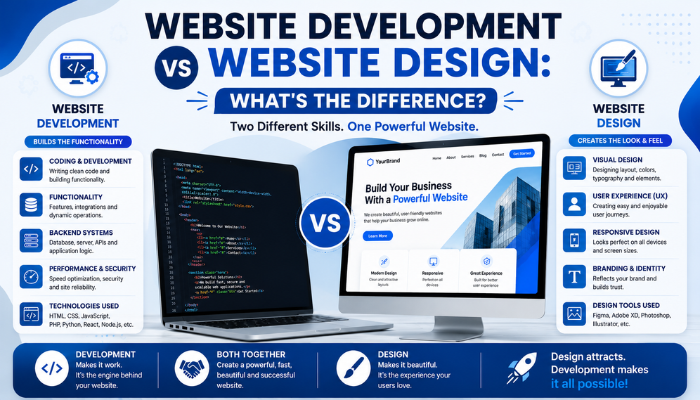
In today's digital landscape, businesses need a strong online presence to attract customers and build credibility. While planning a website, many business owners come across two terms: Website Design and Website Development. Although these terms are often used interchangeably, they represent different aspects of website creation. Website design focuses on the visual appearance and user experience, while website development focuses on coding and functionality. Understanding the difference helps businesses choose the right services for their goals.
Understanding Website Design
Website design refers to the process of creating the visual layout, appearance, and user experience of a website. Designers focus on making websites attractive, user-friendly, and aligned with a brand's identity. They select colors, fonts, graphics, layouts, and navigation structures to ensure visitors can easily interact with the website.
A well-designed website creates a positive first impression, improves engagement, and increases the chances of converting visitors into customers. Website designers use tools such as Figma, Adobe XD, Photoshop, and Sketch to create prototypes and layouts before development begins.
Understanding Website Development
Website development is the technical process of transforming designs into fully functional websites. Developers write code, create databases, integrate third-party services, and ensure that all website features work correctly. Website development includes both front-end development, which users see and interact with, and back-end development, which powers the functionality behind the scenes.
Developers use programming languages and frameworks to build secure, fast, and scalable websites that meet business requirements.
Website Development vs Website Design Comparison
| Website Design | Website Development |
|---|---|
| Focuses on appearance and user experience | Focuses on functionality and performance |
| Creates layouts and visual elements | Builds features and functionality |
| Uses design tools like Figma and Photoshop | Uses coding languages and frameworks |
| Improves branding and engagement | Ensures smooth website operation |
| Works on user interface and navigation | Handles databases and server-side functions |
Key Components of Website Design
Website design consists of several important elements that influence user experience and engagement. User Interface (UI) Design focuses on buttons, menus, icons, and visual elements that users interact with. User Experience (UX) Design ensures visitors can easily navigate the website and find information quickly.
Responsive design is another important aspect, ensuring websites work perfectly across desktops, tablets, and smartphones. Visual branding helps businesses maintain consistency through colors, typography, and imagery.
| Design Component | Purpose |
|---|---|
| User Interface (UI) | Improves visual interaction |
| User Experience (UX) | Enhances usability and navigation |
| Responsive Design | Supports all devices |
| Visual Branding | Strengthens brand identity |
Key Components of Website Development
Website development involves front-end and back-end technologies working together to create a functional website.
| Development Type | Description |
|---|---|
| Front-End Development | Creates the visible part of the website using HTML, CSS, and JavaScript. |
| Back-End Development | Manages servers, databases, APIs, and application logic. |
| Full-Stack Development | Combines both front-end and back-end development. |
Technologies Used in Website Design and Development
Both website design and development rely on different tools and technologies.
| Website Design Tools | Website Development Technologies |
|---|---|
| Figma | HTML5 |
| Adobe XD | CSS3 |
| Photoshop | JavaScript |
| Sketch | React.js |
| Illustrator | PHP, Node.js, Python |
Website Design Process
Professional website design follows a structured process that begins with understanding business objectives and user expectations. Designers create wireframes, prototypes, and visual layouts before handing them over to developers.
| Step | Process |
|---|---|
| 1 | Research & Planning |
| 2 | Wireframing |
| 3 | UI/UX Design |
| 4 | Prototype Creation |
| 5 | Design Approval |
Website Development Process
Once the design is finalized, developers begin building the actual website. They implement features, integrate databases, and test performance before deployment.
| Step | Process |
|---|---|
| 1 | Front-End Coding |
| 2 | Back-End Development |
| 3 | Database Integration |
| 4 | Testing & Quality Assurance |
| 5 | Website Launch |
Why Businesses Need Both Design and Development
A successful website requires both professional design and development. A visually attractive website without functionality can frustrate users, while a functional website with poor design may fail to engage visitors. Combining both elements creates websites that are attractive, fast, secure, and optimized for conversions.
Benefits of Professional Website Design and Development
| Benefit | Business Impact |
|---|---|
| Improved User Experience | Higher customer satisfaction |
| Better SEO Performance | Higher search rankings |
| Mobile Responsiveness | Improved mobile traffic |
| Fast Loading Speed | Lower bounce rates |
| Strong Branding | Increased trust and credibility |
| Enhanced Security | Protection of customer data |
SEO Impact of Website Design and Development
Both website design and development directly influence search engine rankings. Responsive design, clean navigation, fast loading speeds, secure coding practices, and optimized structures help websites rank better on search engines and provide better user experiences.
| SEO Factor | Influenced By |
|---|---|
| Mobile Friendliness | Website Design |
| Page Speed | Website Development |
| User Experience | Website Design |
| Technical SEO | Website Development |
| Site Security | Website Development |
Why Choose Technology Xtend
Technology Xtend offers professional website design and website development services for businesses of all sizes. The company focuses on creating visually appealing, user-friendly, and high-performing websites that help businesses improve online visibility and generate more leads.
| Services | Solutions |
|---|---|
| Website Design | Custom UI/UX Design |
| Website Development | Custom Web Development |
| eCommerce Development | Online Store Solutions |
| SEO Services | Search Engine Optimization |
| Maintenance | Ongoing Website Support |
Conclusion
Understanding Website Development vs Website Design: What's the Difference? is essential for businesses planning a professional website. Website design focuses on visual appeal, branding, and user experience, while website development focuses on coding, functionality, and performance. Both play equally important roles in creating successful websites that attract visitors, improve engagement, and drive business growth.
Whether you're launching a new website or upgrading an existing one, investing in professional website design and development services ensures long-term success in today's competitive digital marketplace.