
- Complete IT Solutions for a Digital World
WhatsApp API for Lead Generation and Follow-Ups
Learn how WhatsApp API helps businesses generate leads, automate follow-ups, manage customer conversations, and improve sales communication.
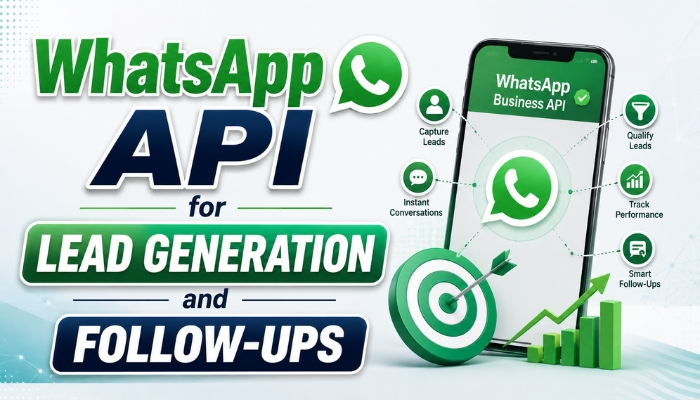
In today’s competitive business environment, generating leads is only one part of the sales process. Businesses also need to respond to enquiries quickly, maintain regular communication, and follow up with potential customers at the right time. WhatsApp API for lead generation can help businesses create a more organized communication process while managing customer conversations at scale.
With a properly integrated WhatsApp Business API, businesses can connect WhatsApp with their websites, CRM systems, lead management software, and other business tools. This allows teams to receive lead enquiries, send relevant updates, manage conversations, and improve follow-up workflows from a centralized system.
What Is WhatsApp API?
WhatsApp API is a business communication solution that allows companies to integrate WhatsApp messaging into their software, CRM, websites, and customer management systems.
Unlike using WhatsApp manually for individual conversations, an API-based setup can help businesses manage a larger number of customer interactions through connected business systems.
For lead management, businesses can use WhatsApp API to:
- Receive customer enquiries
- Send lead notifications
- Respond to enquiries
- Share product or service information
- Send follow-up messages
- Provide appointment reminders
- Connect conversations with CRM records
- Manage customer communication workflows
Why WhatsApp Is Useful for Lead Generation
Many customers prefer messaging because it provides a convenient way to ask questions and receive information. For businesses, this creates an opportunity to make communication more accessible.
A WhatsApp lead generation strategy can connect marketing campaigns with direct customer conversations. Instead of simply collecting a phone number through a form, businesses can encourage prospects to start a WhatsApp conversation.
This can create a smoother journey:
Advertisement → WhatsApp Enquiry → Lead Capture → Sales Follow-Up → Customer Conversion
How WhatsApp API Helps Generate Leads
1. Website-to-WhatsApp Lead Generation
Businesses can add WhatsApp buttons or enquiry options to their websites. When a visitor wants more information, they can start a conversation directly.
This can be useful for businesses offering:
- Web development services
- Real estate services
- Education services
- Healthcare services
- Travel services
- Financial services
- Ecommerce products
- Professional services
Connecting website enquiries with WhatsApp lead management can help sales teams respond to potential customers more efficiently.
2. Lead Generation from Advertising Campaigns
Businesses can connect advertising campaigns with WhatsApp conversations where supported by the advertising platform and setup.
When prospects respond through WhatsApp, their enquiry can become part of the business's lead management workflow.
This allows companies to connect marketing activities with sales communication more effectively.
3. Instant Lead Notifications
Quick notification is important when a new enquiry arrives. Businesses can configure their systems to notify the appropriate sales team when a new lead is received.
For example:
New Website Lead → CRM Records Lead → Sales Team Receives Notification → Representative Contacts Customer
This process can reduce delays between lead submission and the first response.
How WhatsApp API Helps With Follow-Ups
Generating a lead does not guarantee a sale. Some prospects may need additional information, reminders, demonstrations, consultations, or multiple conversations before making a decision.
A WhatsApp API for follow-ups can help businesses create a more structured communication process.
1. Follow-Up Reminders
CRM and lead management systems can help sales representatives identify which leads require follow-up.
For example:
- New enquiry follow-up
- Quotation follow-up
- Product enquiry follow-up
- Appointment follow-up
- Demo follow-up
- Service enquiry follow-up
This helps sales teams maintain consistent communication without relying entirely on manual reminders.
2. Scheduled Customer Messages
Businesses can use approved WhatsApp messaging workflows to send relevant messages at appropriate stages of the customer journey.
Examples may include:
- Appointment reminders
- Order updates
- Service notifications
- Requested information
- Follow-up communication
- Customer support updates
Businesses should follow WhatsApp's applicable messaging policies and obtain the necessary customer permissions before sending promotional or business messages.
3. Personalized Follow-Ups
Generic messages may not be suitable for every customer. A CRM-connected WhatsApp API solution can use relevant customer and lead information to make communication more contextual.
For example, a sales representative can follow up based on the customer's:
- Name
- Product interest
- Service requirement
- Enquiry date
- Previous conversation
- Appointment status
Relevant communication can create a better customer experience than sending the same message to every prospect.
WhatsApp API and CRM Integration
One of the most useful applications of WhatsApp API is connecting it with a CRM system.
When WhatsApp and CRM systems are integrated, businesses can organize customer information and communication activities within their existing lead management workflow.
| CRM Function | WhatsApp Integration Benefit |
|---|---|
| Lead Capture | Connect customer enquiries with lead records |
| Lead Assignment | Notify the appropriate sales representative |
| Follow-Up | Support structured customer communication |
| Customer History | Maintain relevant conversation information |
| Notifications | Send important business updates |
| Reporting | Track lead and communication activities |
Benefits of WhatsApp API for Lead Generation
Faster Lead Response
Quick communication can help businesses respond to new enquiries sooner. Connecting lead sources with WhatsApp notifications can reduce the time required to identify and contact prospects.
Centralized Lead Management
When WhatsApp is integrated with a lead management system, businesses can organize customer information and sales activities more efficiently.
Better Follow-Up Management
Sales representatives can use CRM reminders and communication workflows to manage follow-ups more systematically.
Improved Customer Communication
WhatsApp provides a familiar messaging environment where customers can ask questions, receive information, and communicate with businesses.
Reduced Manual Work
Integration can reduce repetitive activities such as manually copying lead details, sending routine notifications, or checking multiple platforms for new enquiries.
Better Sales Team Coordination
When leads and communication activities are connected with a centralized system, managers can get better visibility into sales activities and pending follow-ups.
WhatsApp API Lead Generation Workflow
A typical WhatsApp lead generation workflow may look like this:
- Customer sees an advertisement or visits the website.
- Customer starts a WhatsApp conversation or submits an enquiry.
- Lead information is captured by the connected system.
- The lead is assigned to the appropriate sales representative.
- The sales representative receives a notification.
- The customer receives a response.
- Follow-up tasks are recorded in the CRM.
- Relevant messages are sent according to the customer journey.
- The sales team updates the lead status.
- The business tracks the final outcome.
Important Features of a WhatsApp API Solution
Businesses selecting a WhatsApp API provider should consider features that support both communication and lead management.
- WhatsApp Business API integration
- CRM integration
- Website lead integration
- Lead notifications
- Customer messaging
- Follow-up management
- Message templates
- Team inbox or shared communication
- Lead status management
- Contact management
- Communication history
- Reporting and analytics
- Role-based access
- Webhook and API support
WhatsApp API vs Manual WhatsApp Communication
| Feature | Manual WhatsApp | WhatsApp API Integration |
|---|---|---|
| Lead Management | Mostly manual | Can connect with CRM |
| Team Communication | Limited organization | Can support centralized workflows |
| Follow-Up | Manual tracking | Can connect with reminders and CRM tasks |
| Lead Notifications | Manual | Can be automated through integrations |
| Reporting | Limited | Better tracking possibilities |
| Scalability | Limited for larger teams | Better suited for structured business communication |
How Businesses Can Use WhatsApp API Across Industries
WhatsApp API for business can support different types of customer communication depending on the industry.
Real Estate
Real estate companies can use WhatsApp communication for property enquiries, site visit reminders, property information, and sales follow-ups.
Education
Educational organizations can communicate with prospective students regarding courses, admission enquiries, application updates, and counselling appointments.
Healthcare
Healthcare businesses can use approved communication workflows for appointment confirmations, reminders, service information, and other appropriate updates.
Ecommerce
Ecommerce businesses can use WhatsApp for order-related notifications, customer support, product enquiries, and other transactional communication.
Travel and Hospitality
Travel businesses can communicate with customers about enquiries, bookings, itinerary information, and service updates.
Best Practices for WhatsApp Lead Follow-Ups
Using WhatsApp for lead generation should focus on providing relevant communication rather than sending excessive messages.
- Respond to new enquiries promptly.
- Use clear and relevant messages.
- Personalize communication where appropriate.
- Keep customer information organized.
- Respect customer communication preferences.
- Use approved message templates where required.
- Avoid sending unnecessary messages.
- Maintain accurate lead statuses.
- Connect WhatsApp with CRM or lead management software where appropriate.
- Review communication performance regularly.
Why Businesses Should Connect WhatsApp With Lead Management Software
Using WhatsApp separately from lead management software can make it harder for sales teams to maintain a complete view of customer interactions.
By connecting WhatsApp API with lead management software, businesses can bring lead capture, assignment, communication, follow-ups, and status updates into a more organized workflow.
This is particularly useful for businesses that receive enquiries from multiple sources such as websites, Google Ads, social media campaigns, and online directories.
Conclusion
WhatsApp API for lead generation and follow-ups can help businesses create a more organized customer communication process. By connecting WhatsApp with websites, CRM platforms, and lead management software, companies can improve lead response, organize customer information, manage follow-ups, and support sales teams.
The most effective approach is not simply sending more messages. Businesses should focus on timely, relevant, permission-based communication and connect WhatsApp with a structured lead management system. With the right setup, WhatsApp API can become an important part of a modern lead generation and customer communication strategy.