
- Complete IT Solutions for a Digital World
Why Data Security Matters for Business Software
Learn why data security is essential for business software and how strong protection safeguards customer data, business information, and daily operations.
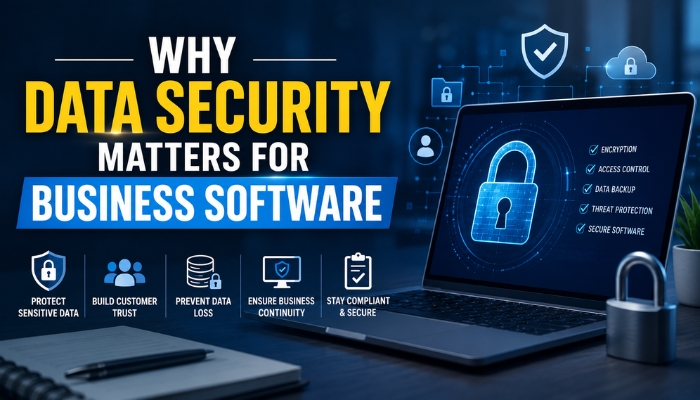
Businesses depend on software to manage customer information, employee records, financial details, sales data, documents, and daily operations. As more business activities move online, protecting this information has become an important part of running a reliable and successful organization.
Data security in business software helps protect sensitive information from unauthorized access, accidental loss, data theft, and other security risks. Whether a company uses custom software, CRM systems, accounting platforms, lead management software, or cloud-based applications, security should be considered from the beginning.
What Is Data Security in Business Software?
Data security refers to the methods and technologies used to protect business information from unauthorized access, modification, disclosure, or loss.
Business software may store different types of sensitive information, including:
- Customer contact information
- Employee records
- Business documents
- Sales and lead information
- Payment-related information
- Login credentials
- Business reports
- Internal company information
Protecting this information helps businesses maintain privacy, operational continuity, and customer confidence.
Why Data Security Matters for Businesses
1. Protects Sensitive Business Information
Businesses collect and store a large amount of information through their software systems. If this information is not properly protected, unauthorized individuals may gain access to important business or customer data.
Strong business software security helps limit unauthorized access and protects sensitive information.
2. Builds Customer Trust
Customers expect businesses to handle their information responsibly. A company that takes data protection seriously can create greater confidence among customers and business partners.
Secure login systems, protected databases, access controls, and safe data handling practices can help demonstrate that customer information is being treated responsibly.
3. Reduces the Risk of Data Loss
Data can be lost because of accidental deletion, hardware problems, software issues, system failures, or security incidents.
Regular backups and reliable recovery processes can help businesses restore important information when unexpected problems occur.
4. Prevents Unauthorized Access
Not every employee needs access to every piece of business information. A secure software system can use role-based access control to provide employees with access according to their responsibilities.
For example, a sales employee may access customer leads, while financial information may remain restricted to authorized accounting staff.
5. Supports Business Continuity
A serious security problem can interrupt normal business operations. If important systems become unavailable, employees may not be able to access customer records, process orders, manage leads, or perform other essential tasks.
Security measures combined with backups and recovery planning can help businesses continue operations and reduce downtime.
Important Data Security Features in Business Software
Secure User Authentication
Strong authentication helps prevent unauthorized users from accessing business software. Secure passwords, multi-factor authentication, session management, and account protection can provide additional security.
Role-Based Access Control
Role-based access control allows administrators to determine what different users can view, edit, or manage within a software system.
Data Encryption
Data encryption helps protect information by converting it into a protected format that cannot be easily understood without the appropriate authorization or key.
Regular Backups
Regular backups are essential for protecting important business information. Businesses should maintain reliable backup procedures and periodically check whether data can actually be restored.
Security Updates
Software should be regularly maintained and updated. Security updates can address known vulnerabilities and help keep business systems protected against emerging threats.
Activity Monitoring
Monitoring user activity can help administrators identify unusual behavior, unauthorized access attempts, and other potential security concerns.
Common Data Security Risks for Business Software
Businesses can face several types of security risks when using software systems, including:
- Weak or reused passwords
- Unauthorized account access
- Outdated software
- Improper user permissions
- Unprotected databases
- Phishing attempts
- Malware and harmful software
- Accidental data deletion
- Insecure third-party integrations
- Lack of regular backups
Identifying these risks early can help businesses develop stronger data security strategies.
Best Practices for Improving Business Software Security
- Use Strong Passwords: Encourage users to create unique and difficult-to-guess passwords.
- Enable Multi-Factor Authentication: Add an additional verification step wherever possible.
- Control User Permissions: Give employees only the access they need for their roles.
- Keep Software Updated: Apply security patches and updates regularly.
- Back Up Important Data: Maintain regular backups and test the recovery process.
- Encrypt Sensitive Information: Protect important data during transmission and storage where appropriate.
- Monitor Activity: Review system logs and user activity for unusual behavior.
- Train Employees: Teach staff how to identify phishing, suspicious links, unsafe downloads, and other security risks.
Data Security in Custom Business Software
When developing custom business software, security should be included throughout the development process rather than added only after the system is completed.
Developers can consider security at different levels, including:
- Secure application architecture
- Protected databases
- Secure authentication
- Access permissions
- Input validation
- Secure APIs
- Data encryption
- Error handling
- Regular security testing
- Backup and recovery systems
This approach can help create software that is more reliable and better prepared for long-term business use.
Data Security and Business Growth
Security is not only a technical requirement. It can also support long-term business growth.
When businesses protect customer and operational data, they can reduce unnecessary disruptions, improve customer confidence, protect valuable information, and create a stronger foundation for digital operations.
As businesses expand, their software systems may handle more users, customers, transactions, and information. Building security into these systems from the beginning can make future growth easier to manage.
Conclusion
Data security matters for business software because modern organizations depend on digital systems for many critical operations. Protecting customer information, employee data, financial records, and business documents helps reduce security risks and maintain trust.
From secure authentication and access controls to encryption, backups, monitoring, and regular updates, businesses should adopt multiple layers of protection.
Whether you use ready-made software or invest in custom business software development, making data security a priority can help protect your information and create a more reliable foundation for long-term business growth.