
- Complete IT Solutions for a Digital World
Why Mobile App Security Is Important for Businesses
Understand mobile app security risks and discover effective ways to protect business applications, customer data, and online transactions.
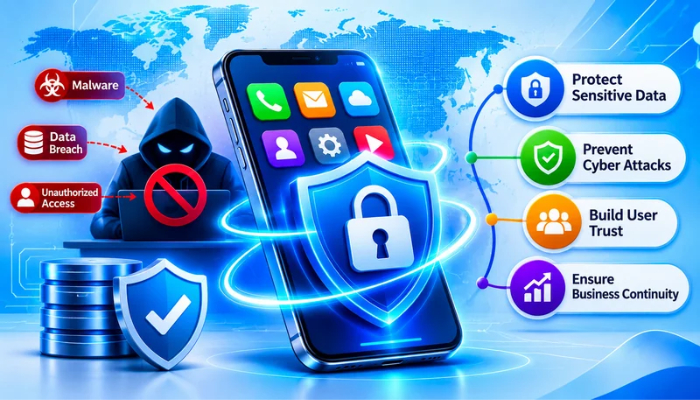
Mobile applications have become an important part of modern businesses. Companies use mobile apps to connect with customers, manage orders, accept payments, share information, and provide online services. From shopping apps to banking and education platforms, mobile applications handle different types of user information every day.
However, mobile apps can also face security risks. Weak passwords, data leaks, unsafe connections, and outdated software can put business and customer information at risk.
Mobile app security helps businesses protect their applications, customer data, and digital operations from online threats. A secure mobile application also helps build customer trust and supports safe business activities.
What Is Mobile App Security?
Mobile app security refers to the methods and technologies used to protect mobile applications from unauthorized access, cyberattacks, data theft, and other security problems.
It includes protecting the app's code, user accounts, stored information, payment details, and communication between the app and its server.
A secure mobile application helps businesses provide a safer experience to their customers while protecting important business information.
Why Is Mobile App Security Important for Businesses?
Mobile app security is important because business applications often collect and process sensitive information. A security problem can affect both the company and its customers.
Here are some major reasons why businesses should focus on mobile application security.
1. Protects Customer Information
Mobile apps may collect customer names, email addresses, phone numbers, addresses, and other personal details.
If an application does not have proper security measures, this information may be exposed to unauthorized users.
Strong mobile app data protection helps businesses keep customer information safe and maintain user trust.
2. Prevents Data Theft
Cybercriminals may try to access business applications to steal important information. This can include customer records, business documents, login details, and financial information.
Mobile app security solutions help reduce these risks through encryption, secure authentication, and regular security testing.
3. Protects Online Payments
Many e-commerce, food delivery, and service applications allow customers to make online payments.
Payment security is important because users expect their financial information to remain protected.
Businesses should use trusted payment gateways, secure communication protocols, and proper payment verification methods to protect online transactions.
4. Builds Customer Trust
Customers prefer applications that protect their personal information and provide a secure experience.
If users feel that an app is unsafe, they may stop using it or choose another service.
Strong mobile application security helps businesses build customer confidence and maintain long-term relationships.
5. Reduces Cybersecurity Risks
Mobile applications can face different types of cyber threats, such as:
- Malware attacks
- Phishing attempts
- Data breaches
- Unauthorized access
- Password attacks
- Insecure network connections
- Application code vulnerabilities
Regular security updates and testing help businesses identify and reduce these risks.
6. Protects Business Data
Business applications may store important information related to employees, customers, sales, orders, and daily operations.
A security breach can affect business activities and expose confidential records.
Proper mobile application data security helps protect business information and supports safer digital operations.
7. Supports Business Reputation
A mobile app security problem can damage a company's reputation. Customers may lose confidence in a business if their information is not handled safely.
Businesses that follow good security practices can reduce the chances of security incidents and protect their brand image.
Common Mobile App Security Threats
Understanding common security threats helps businesses take the right precautions and improve their mobile application protection.
| Security Threat | What It Means |
|---|---|
| Malware | Harmful software that can affect mobile devices or applications. |
| Data Breach | Unauthorized access to private or confidential information. |
| Weak Passwords | Easy-to-guess passwords that make accounts vulnerable. |
| Phishing | Fake messages or websites designed to steal user information. |
| Insecure APIs | Poorly protected connections between apps and servers. |
| Code Tampering | Unauthorized changes made to an application's code. |
| Unsecured Networks | Unsafe connections that may expose information. |
Important Mobile App Security Practices
Businesses should follow these mobile app security best practices while developing and maintaining mobile applications.
1. Use Strong User Authentication
User authentication helps verify the identity of people accessing an application.
Businesses can use strong passwords, multi-factor authentication (MFA), and secure login methods to prevent unauthorized access.
2. Encrypt Sensitive Data
Data encryption converts information into a protected format that cannot easily be understood without the correct key.
Businesses should use encryption to protect sensitive information during storage and transmission.
3. Keep Mobile Apps Updated
Regular updates help fix security weaknesses, improve app performance, and maintain compatibility with new operating systems.
Businesses should release security patches whenever necessary.
4. Use Secure API Integration
Mobile applications often connect with websites, databases, payment systems, and other software through APIs.
Secure API integration helps protect information exchanged between different systems. Businesses should use proper authentication, authorization, and data validation for API requests.
5. Perform Regular Security Testing
Mobile app security testing helps identify weaknesses before they become serious problems.
Businesses should conduct security reviews, vulnerability assessments, and penetration testing at suitable stages of app development and maintenance.
6. Follow Secure Coding Practices
Developers should write application code carefully to reduce security weaknesses.
Secure coding practices include validating user inputs, protecting sensitive information, avoiding hardcoded passwords, and using trusted software libraries.
7. Monitor App Activity
Regular monitoring helps businesses identify unusual login attempts, suspicious activities, and possible security issues.
Monitoring and security alerts can help teams respond to potential threats more quickly.
Mobile App Security for Different Industries
Different industries use mobile applications for different purposes. Each industry has its own security requirements.
| Industry | Why Mobile App Security Matters |
|---|---|
| E-Commerce | Protects customer accounts and online payments. |
| Banking | Helps secure financial information and transactions. |
| Healthcare | Protects patient records and personal information. |
| Education | Helps safeguard student and teacher information. |
| Real Estate | Protects customer enquiries and property-related records. |
| Food Delivery | Helps secure customer details and order information. |
| Travel | Protects booking details and customer accounts. |
What Happens When a Business Ignores Mobile App Security?
Ignoring mobile app security can create several problems for a business.
- Customer Data Exposure: Personal information may become accessible to unauthorized users.
- Financial Loss: Security incidents can lead to recovery expenses and financial damage.
- Loss of Customer Trust: Users may stop using an application if they feel unsafe.
- Business Disruption: Cyberattacks can affect application availability and daily operations.
- Legal and Compliance Issues: Poor data protection practices may create regulatory problems depending on the business and applicable laws.
These risks show why security should be considered from the beginning of mobile app development.
How to Choose a Secure Mobile App Development Company
Businesses should consider security when selecting a mobile app development company.
Before starting a project, check the following points:
- Experience in Android and iOS app development.
- Knowledge of secure coding practices.
- Understanding of data encryption and authentication.
- Experience with secure API integration.
- Mobile app testing and quality assurance processes.
- Support for regular updates and maintenance.
- Clear communication about data protection requirements.
Choosing an experienced development team can help businesses build mobile applications with security in mind.
Conclusion
Mobile app security is important for every business that uses applications to connect with customers, manage information, or accept online payments.
Strong authentication, data encryption, secure API integration, regular updates, and security testing help reduce common application risks.
Businesses should consider security at every stage of mobile app development. A secure mobile application helps protect customer information, support business operations, and build long-term customer trust.
For professional mobile app development and software solutions, businesses can explore Technology Xtend.