
- Complete IT Solutions for a Digital World
Why Website Accessibility Matters for Every Business
Learn why website accessibility is essential for businesses to improve user experience, boost SEO rankings, increase customer engagement, and create an inc
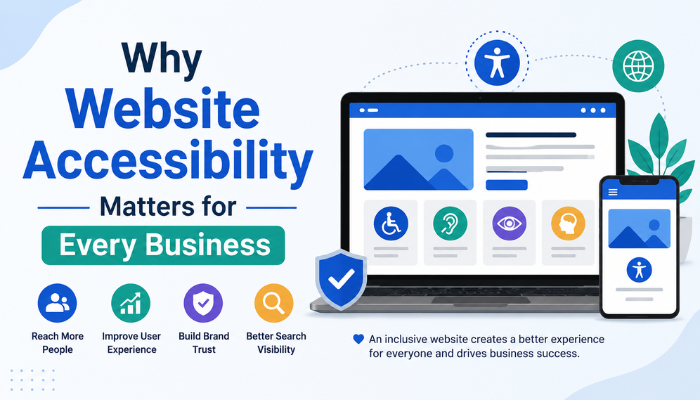
In today's competitive digital landscape, having a professional website is no longer enough. Businesses must ensure that every visitor can easily access and interact with their website, regardless of their abilities. This is where Website Accessibility becomes an essential part of modern web development. An Accessible Website ensures that people with visual, hearing, cognitive, or physical disabilities can browse, understand, and use online content without barriers.
As businesses continue to invest in digital transformation, Website Accessibility for Businesses has become more important than ever. It not only helps companies reach a wider audience but also improves customer satisfaction, strengthens brand reputation, enhances User Experience (UX), and supports better search engine rankings. Whether you operate a startup, eCommerce business, healthcare organization, educational institution, or enterprise, creating an Accessible Website should be one of your highest priorities.
Modern customers expect websites to be fast, responsive, easy to navigate, and accessible across every device. Businesses that invest in Accessible Website Development create digital experiences that benefit everyone while staying ahead of competitors in today's online marketplace.
What Is Website Accessibility?
Website Accessibility refers to designing and developing websites so that everyone, including people with disabilities, can easily use digital content. An Accessible Website works seamlessly with assistive technologies such as screen readers, voice recognition software, keyboard navigation, screen magnifiers, and alternative input devices.
International standards such as the Web Content Accessibility Guidelines (WCAG) provide recommendations that help developers create websites accessible to all users. Following these standards ensures that businesses provide equal digital access while improving overall usability.
Features of an Accessible Website
- Keyboard-friendly navigation
- Alternative text for images
- Proper heading hierarchy
- Readable typography
- Responsive Website Design
- High color contrast
- Accessible forms
- Video captions and transcripts
- Clear navigation menus
- Fast loading speed
These features improve both accessibility and overall website usability, benefiting every visitor regardless of ability.
Why Website Accessibility Matters for Every Business
Millions of internet users rely on assistive technologies every day. If your website cannot be accessed properly, your business may lose valuable customers without even realizing it. Investing in Website Accessibility Services allows businesses to remove these digital barriers and provide equal access to products, services, and information.
Accessibility also supports older adults, users browsing on smartphones, people with temporary injuries, and visitors using slow internet connections. Simply put, accessibility benefits everyone.
Benefits of Website Accessibility
Reach More Customers
An Accessible Website allows businesses to reach a larger audience by ensuring every visitor can use the website effectively. Businesses become more inclusive while attracting potential customers who may otherwise struggle with inaccessible websites.
Benefits include:
- More website visitors
- Higher customer engagement
- Increased online inquiries
- Better lead generation
- Improved conversion rates
Improve User Experience (UX)
One of the biggest advantages of Website Accessibility is a better User Experience (UX). Simple navigation, readable content, accessible forms, and responsive layouts make browsing easier for everyone.
Users are more likely to stay longer on websites that are easy to navigate, reducing bounce rates while increasing customer satisfaction.
Improve SEO Rankings
Many Website Accessibility Best Practices also improve search engine optimization. Google rewards websites that provide better user experiences and clean website structures.
Accessibility supports SEO through:
- Alternative image text
- Proper HTML heading structure
- Responsive Website Design
- Fast loading pages
- Descriptive internal links
- Semantic HTML
As a result, businesses often achieve higher rankings while creating a more SEO-Friendly Website.
Strengthen Brand Reputation
Businesses that prioritize Website Accessibility for Businesses demonstrate social responsibility and customer care. Customers appreciate companies that make digital services available to everyone, regardless of ability.
An accessible website builds:
- Customer trust
- Brand credibility
- Long-term customer loyalty
- Positive business reputation
Increase Conversion Rates
Visitors are more likely to complete purchases, fill inquiry forms, schedule appointments, or contact your business when your website is easy to use.
By eliminating navigation difficulties and improving accessibility, businesses create smoother customer journeys that generate more conversions.
Essential Accessibility Features Every Business Website Should Have
Alternative Text for Images
Every informative image should contain descriptive Alt Text. This helps screen readers explain visual content to users with visual impairments while improving image SEO.
Keyboard Navigation
Many users cannot operate a mouse. An Accessible Website allows complete navigation using only a keyboard, ensuring equal usability for all visitors.
Readable Fonts
Choosing clear fonts, appropriate font sizes, and sufficient spacing improves readability across desktops, tablets, and smartphones.
High Color Contrast
Proper contrast between text and background colors improves readability for users with low vision or color blindness.
Accessible Contact Forms
Forms should include clear labels, instructions, accessible buttons, and helpful validation messages. Well-designed forms improve lead generation while supporting accessibility.
Video Accessibility
Videos should include captions and transcripts so that users with hearing impairments can understand multimedia content effectively.
Website Accessibility Improves Mobile Experience
Today, the majority of internet users browse websites using smartphones. Businesses investing in Responsive Website Design automatically improve accessibility for mobile users.
Accessible mobile websites provide:
- Responsive layouts
- Touch-friendly navigation
- Fast loading speed
- Easy-to-read content
- Better mobile usability
These improvements increase customer satisfaction while supporting better Google rankings.
Industries That Benefit from Website Accessibility
Every industry benefits from investing in Accessible Website Development. Whether your goal is improving customer experience or complying with accessibility standards, accessible websites support long-term business growth.
| Industry | Benefits of Website Accessibility |
|---|---|
| Healthcare | Improves patient access to healthcare services |
| Education | Provides equal learning opportunities for students |
| E-commerce | Creates better online shopping experiences |
| Banking | Makes financial services accessible to everyone |
| Government | Provides equal access to public information |
| Hospitality | Simplifies hotel booking and travel services |
| Real Estate | Improves property search experiences |
Common Website Accessibility Mistakes
Even professionally designed websites can unintentionally create barriers for users if accessibility is overlooked. Identifying and fixing these issues helps businesses provide a smoother browsing experience while improving overall website quality.
Missing Alternative Text
Many websites upload images without descriptive alternative text. This makes it difficult for screen readers to explain image content to visually impaired users. Adding meaningful image descriptions improves both accessibility and image SEO.
Poor Color Contrast
Using light-colored text on a light background or dark text on a dark background reduces readability. Choosing appropriate color combinations ensures content remains easy to read for all visitors.
Complicated Navigation
Confusing menus and poorly organized page structures make it difficult for visitors to find information. Simple navigation with clear labels creates a better browsing experience.
Forms Without Labels
Forms should contain properly labeled input fields and helpful validation messages so users clearly understand what information is required before submitting.
Videos Without Captions
Video content should always include captions or transcripts to make information available to users with hearing impairments.
Best Practices for an Accessible Website
Businesses should regularly review and improve their websites to ensure they remain user-friendly and accessible as technology evolves.
- Use semantic HTML structure.
- Maintain logical heading hierarchy.
- Optimize website speed.
- Ensure mobile responsiveness.
- Test using keyboard navigation.
- Add descriptive image alternative text.
- Use readable typography.
- Provide captions for multimedia content.
- Design clear call-to-action buttons.
Following these recommendations creates a better browsing experience while helping businesses achieve stronger long-term digital performance.
How Accessibility Supports Business Growth
Improving accessibility is not only about supporting users with disabilities—it also creates measurable business advantages. Companies that remove digital barriers often experience higher engagement, stronger customer trust, improved search visibility, and increased online conversions.
Accessible websites are also easier to maintain because they follow organized coding standards and structured layouts, making future updates much simpler for developers.
| Business Challenge | How Custom Accessibility Improvements Help |
|---|---|
| High Bounce Rate | Improves navigation and readability |
| Low User Engagement | Creates a smoother browsing experience |
| Poor Search Rankings | Supports better technical SEO practices |
| Limited Customer Reach | Allows more users to access website content |
| Lower Conversion Rate | Simplifies forms and customer journeys |
Future of Accessible Websites
As technology continues to evolve, accessibility will become an even bigger priority. Voice search, artificial intelligence, smart assistants, wearable devices, and evolving web standards are changing how users interact with websites.
Businesses that invest in accessibility today will be better prepared for future technologies while providing consistently positive customer experiences. Digital inclusion is becoming a competitive advantage rather than simply a technical recommendation.
Why Choose Technology Xtend?
Technology Xtend specializes in creating modern websites that combine performance, security, usability, and search engine optimization. Every project is developed according to current industry standards to deliver exceptional experiences across desktop, tablet, and mobile devices.
The development team focuses on responsive layouts, clean coding practices, optimized loading speed, intuitive navigation, performance optimization, and long-term scalability. Every website is designed to support business growth while delivering an excellent experience to every visitor.
Services Offered
- Custom Website Development
- Business Website Design
- eCommerce Website Development
- WordPress Development
- Website Redesign
- Website Maintenance
- Performance Optimization
- Technical SEO Implementation
Conclusion
An inclusive website is no longer optional in today's competitive online environment. Businesses that prioritize usability create stronger customer relationships, improve online visibility, and increase long-term profitability. Small improvements such as better navigation, readable content, optimized forms, and responsive layouts make a significant difference in how visitors interact with your website.
Whether you are building a new business website or upgrading an existing one, investing in accessibility is a smart long-term decision. By partnering with Technology Xtend, businesses can develop future-ready digital solutions that deliver outstanding performance, improve customer satisfaction, and support sustainable business growth.